



Notarizing Power of Attorney with Expired ID in CA
Notary Services, Power Of Attorney, Expired ID California
Can You Notarize a Power of Attorney with an Expired ID in California?
When families are caring for aging parents, paperwork is often the last thing they want to worry about. Yet documents like a Power Of Attorney can’t wait. This is the story of a woman who contacted me for Notary Services for herself and her elderly mother in California—and discovered that an Expired ID California doesn’t always mean “no” when it comes to notarization.
The Call: “My Mom’s ID Is Expired—Can We Still Sign?”
A daughter reached out, clearly stressed. She needed Notary Services for a Power Of Attorney so she could help manage her elderly mother’s finances and medical decisions. Her mother was homebound, and during the pandemic years, renewing identification had fallen to the bottom of the priority list. By the time we spoke, her mother’s state ID had already expired.
The daughter’s main concern was simple but urgent: “Can you still notarize the Power Of Attorney if my mom’s ID is expired?” She had heard conflicting answers from friends, online forums, and even a bank employee. This kind of confusion is very common, especially around Expired ID California rules, because there’s a big difference between what the law allows and what individual institutions—like Title/Escrow companies and Lenders—will actually accept.
📌 Key Takeaway: An expired ID does not automatically disqualify you from getting a document notarized in California, but there are strict limits and important exceptions.
California’s Rules on Expired ID for Notarization
Under California law, a notary must confirm a signer’s identity using specific types of government-issued identification. According to the California Notary Public Handbook and Civil Code §1185, an ID is acceptable if it is:
Current (not expired), or
Expired, but issued within the last five years.
That five-year window is crucial. For example, if your California ID was issued in 2019 and expired in 2024, a notary may still accept it for notarization up until 2029, as long as it falls within that five-year issuance period. This is why you’ll often see the phrase Expired ID California “issued within five years” rule referenced in professional notary resources (California Secretary of State; National Notary Association).
Common acceptable IDs include:
A driver’s license or state ID issued by any U.S. state
U.S. passport or valid foreign passport with proper U.S. stamp
U.S. military ID
Certain government employee IDs and tribal IDs
💡 Pro Tip: The key is not just whether the ID is expired, but when it was issued. If it was issued more than five years ago, a California notary cannot use it—no exceptions.
Why This Matters More for Non–Real Estate Notarizations
In the case of the daughter and her mother, the document was a Power Of Attorney for personal and financial matters—not a deed, mortgage, or loan package. That difference is important because California’s five-year Expired ID California rule applies broadly to notarial acts, but the strictest practical requirements often show up in Real Estate Transactions and Loan Signings.
For many everyday documents—like a general Power Of Attorney, advanced health care directive, or financial authorization—the notary’s main job is to follow state law. If the ID fits the five-year issuance rule and is one of the accepted types, the notary can typically proceed, assuming all other requirements are met and the signer is willing, aware, and present.
That’s exactly what happened with this family. We checked the mother’s ID: although it was expired, it had been issued less than five years earlier. That meant I could legally use it for the notarization of her Power Of Attorney under California law.
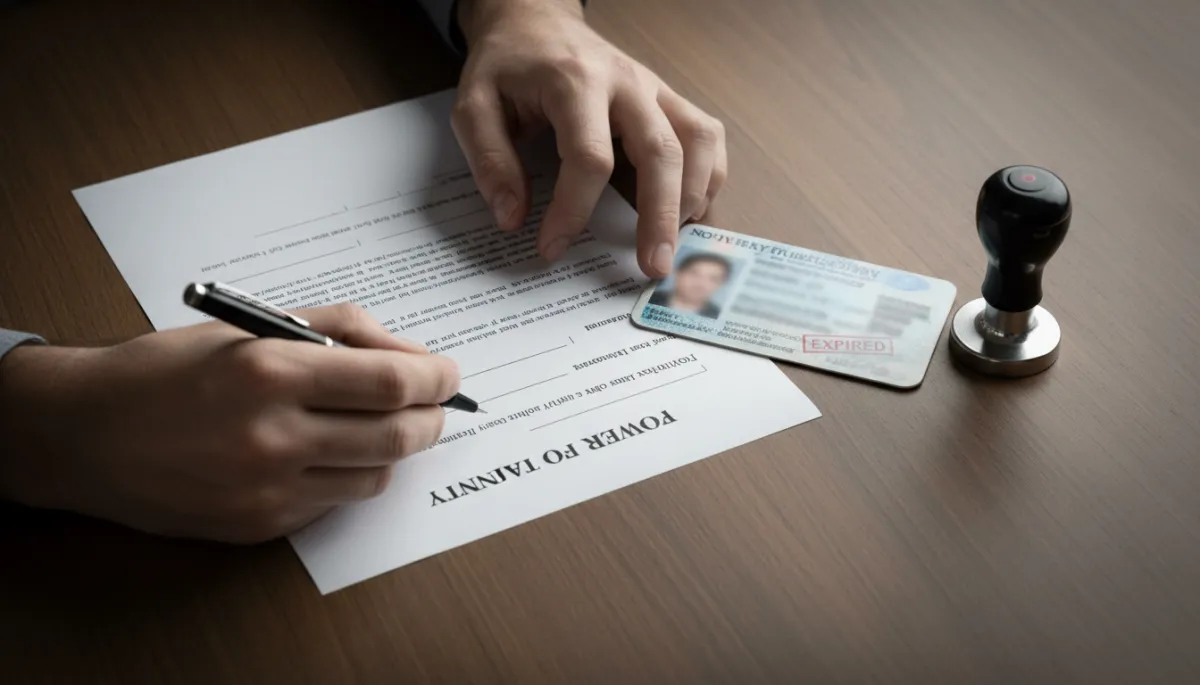
Even with an expired ID, California may allow notarization if it was issued within five years.
The Big Exception: Real Estate, Title/Escrow, and Lenders
Where people often get tripped up is assuming that if a notary can legally complete the notarization, every company involved will automatically accept the document. That is not the case, especially with Real Estate Transactions and Loan Signings.
In practice, most Title/Escrow companies and Lenders require a current, unexpired ID, even if California law technically allows an expired one issued within the last five years. Their internal underwriting guidelines, fraud-prevention policies, or investor requirements often go beyond the minimum state standards. If you’re signing a deed of trust, mortgage, or any loan documents, you should assume that:
The notary must follow California’s identification rules and
The Title/Escrow company and Lender may insist on a fully valid, non-expired ID.
That means even if your Expired ID California meets the five-year rule and a notary could legally notarize your signature, the loan might still be rejected or delayed by the Title/Escrow team or the bank because they require “current only” identification. This is why many mobile notaries, including myself, always ask whether the notarization is for a real estate or loan transaction before confirming an appointment.
📌 Key Takeaway: For Real Estate Transactions and Loan Signings, plan on having a current, unexpired ID. Title/Escrow and Lenders can refuse documents even if the notary followed California law perfectly.
What If the ID Is Too Old? Credible Witnesses and Other Options
Sometimes, the ID has been expired for more than five years, or the person never had a qualifying ID at all. This can happen with very elderly signers, people who no longer drive, or those who have lost documents due to life events. In those situations, California law provides another path: credible witnesses.
A credible witness is someone who personally knows the signer and can swear under oath that:
The signer is who they say they are,
The signer does not have an acceptable ID and cannot reasonably obtain one, and
The witness has no financial interest in the document being signed.
In California, if the credible witness is personally known to the notary, one witness is enough. If not, two credible witnesses are required, and they must present valid IDs. This option can sometimes rescue a Power Of Attorney notarization when the signer’s own identification no longer qualifies under the Expired ID California five-year rule.
However, once again, for Real Estate Transactions and Loan Signings, Title/Escrow and Lenders may refuse documents notarized using credible witnesses. Always check with the institution that will receive the document before relying on this method for anything involving property or loans.
How Our Client’s Power Of Attorney Signing Turned Out
Returning to the daughter and her mother: once I confirmed that the mother’s ID was expired but had been issued within the last five years, we scheduled a mobile notary visit to their home. During the appointment, I:
Verified the mother’s identity using her expired-but-qualifying ID,
Confirmed that she understood the Power Of Attorney and was signing willingly,
Properly completed the notarial acknowledgment and recorded the details in my journal.
The daughter left the appointment relieved. She could now help pay bills, communicate with service providers, and support her mother without constant roadblocks. Because this Power Of Attorney was not tied to a Real Estate Transaction or Loan Signing, there was no Title/Escrow or Lender imposing stricter ID rules on top of California law. The notarization was sufficient for the purposes she needed.
Practical Tips If You Need a Power Of Attorney Notarized in California
If you’re planning to sign a Power Of Attorney and are worried about identification, here are some steps to make the process smoother:
Check the ID issue date, not just the expiration date. If it was issued within the last five years, many Notary Services in California can still use it, even if it’s technically expired.
Clarify the purpose of the document. If the Power Of Attorney will be used for banking, healthcare, or general financial matters, California’s five-year Expired ID rule may be enough. If it will be used for Real Estate Transactions or Loan Signings, expect stricter ID requirements from Title/Escrow and Lenders.
Ask the receiving institution what they require. Before the notary arrives, confirm with your bank, attorney, or title company whether an expired ID issued within five years—or credible witnesses—will be accepted.
Consider renewing ID when possible. Even though Notary Services can sometimes work with an Expired ID California, having a current ID will give you more flexibility with banks, title companies, and other institutions.
Final Thoughts: Don’t Let an Expired ID Stop You from Getting Help
Navigating Notary Services while caring for an aging parent can feel overwhelming, especially when identification isn’t perfectly up to date. The good news is that California’s rules do provide some flexibility: an Expired ID California can still be used for many notarizations, including a Power Of Attorney, as long as it was issued within the last five years and meets the state’s requirements.
At the same time, it’s important to remember that Real Estate Transactions and Loan Signings are a different world. Title/Escrow companies and Lenders often require a current, unexpired ID, regardless of what state law technically allows. Understanding that distinction before you schedule your notarization can save you time, stress, and repeat appointments.
If you’re unsure whether your situation qualifies, reach out to a knowledgeable California notary and explain your needs. With the right guidance—and a clear understanding of how Expired ID California rules work—you can move forward with the Power Of Attorney and other important documents your family depends on.